

ATT Email Set up
Setting up your AT&T email correctly is the first step toward enjoying a smooth, reliable, and secure communication experience. Whether you’re using AT&T as your primary email provider or accessing legacy accounts through the AT&T email domain, the platform offers a stable environment for both personal and professional use. However, to fully unlock its capabilities, understanding the essentials of ATT email set up and the correct configuration process is crucial.
A proper setup ensures that your account stays secure, easily accessible across devices, and fully synchronized with the apps and mail clients you use every day. With the rise of mobile connectivity and cross-platform access, having the right ATT mail settings, including accurate AT&T mail server settings, helps you avoid common issues like login failures, syncing errors, missing emails, or blocked outgoing mail. Whether you prefer using desktop clients like Outlook, mobile apps such as the ATT email app for android, or iOS Mail using the correct AT&T net email settings for iphone, proper setup is the key to uninterrupted service.
This blog is designed to walk you through every major component of AT&T email configuration. You will learn how to apply the correct ATT mail IMAP settings, troubleshoot your ATT mail settings for outlook, configure stable ATT SMTP settings, and use the updated AT&T IMAP settings for secure access on any device. By the end, you’ll have a complete understanding of how to seamlessly integrate your AT&T Mail account across platforms while ensuring maximum security and performance.
Requirements before ATT Email Set up
Before you begin the ATT email set up, make sure you meet the following essential requirements. Having these elements prepared will help you avoid login errors, syncing issues, and configuration problems across various devices.
1. Active AT&T Email or Sub-Account
- You must have a working AT&T email address or sub-account under the AT&T email domain.
- Only active accounts can be configured using the correct ATT mail settings and authentication protocols.
2. Updated Web Browser or Mail Application
- Ensure your browser or mail app is fully updated to support current security standards.
- Updated apps make it easier to apply AT&T mail server settings, including ATT mail IMAP settings and SMTP settings.
- This is particularly important for users managing ATT mail settings for outlook, for android, or for iphone.
3. Stable and Reliable Internet Connection
- A strong connection helps prevent errors during synchronization.
- It also ensures smooth validation of your AT&T IMAP settings and other server configurations.
4. Two-Factor Authentication (2FA) Readiness
- Enable 2FA to add an extra layer of protection to your account.
- This security measure helps safeguard login attempts across devices and apps.
5. ATT Secure Mail Key Instead of Password
- Many third-party apps require a Secure Mail Key rather than your standard AT&T password.
- This key ensures compatibility with secure servers, especially when setting up Outlook, Android, or iOS mail clients.
Having all these requirements in place ensures a smooth, secure, and successful ATT email set up across any device.
Steps for ATT Email Set up on a Web Browser
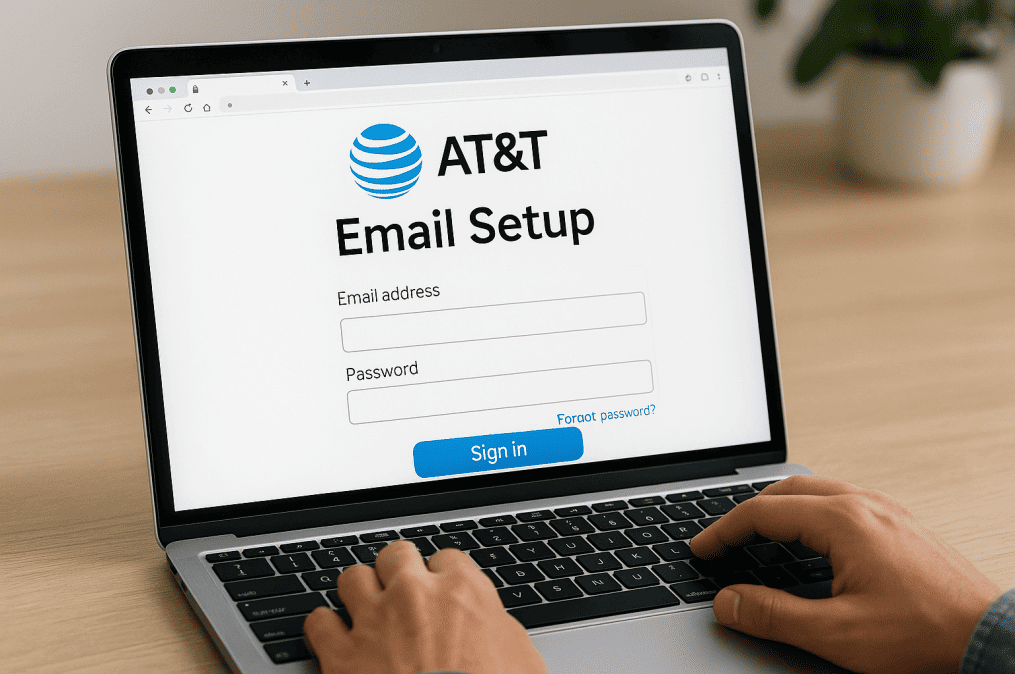
Setting up your AT&T email through a web browser is one of the easiest ways to access your mailbox without worrying about manual configurations or device compatibility. Whether you’re new to the ATT email set up process or simply logging in from a new device, following these steps ensures quick and secure access.
-
Go to Currently.com:
Start by visiting com, AT&T’s official platform for email access. This site is directly linked to the AT&T email domain, ensuring safe login and smooth access to your inbox.
-
Navigate to the AT&T Email Login Page:
Once on the homepage, select the Mail option. This redirects you to the secure login portal where your ATT mail settings and account authentication are processed.
-
Enter Your Credentials:
Input your AT&T email address and password. If you’re using third-party mail clients later, remember that they may require a Secure Mail Key for applying ATT mail IMAP settings, SMTP settings, and other AT&T mail server settings.
-
Account Dashboard Overview:
After logging in, you will reach your inbox dashboard. Here you can:
- Read and compose emails
- Organize folders
- Adjust basic ATT mail settings
- Sync data across devices such as Outlook, Android or iPhone.
-
Troubleshooting Browser Issues:
If the page doesn’t load or login fails:
- Clear cache and cookies
- Update your browser
- Disable extensions that may block secure scripts used by the AT&T IMAP settings
-
Recommended Security Settings:
To enhance security:
- Enable two-factor authentication
- Avoid using public Wi-Fi
- Log out on shared devices
Following these steps ensures a smooth, secure, and efficient AT&T email experience through any modern web browser.
ATT Email Set up on Windows Mail App
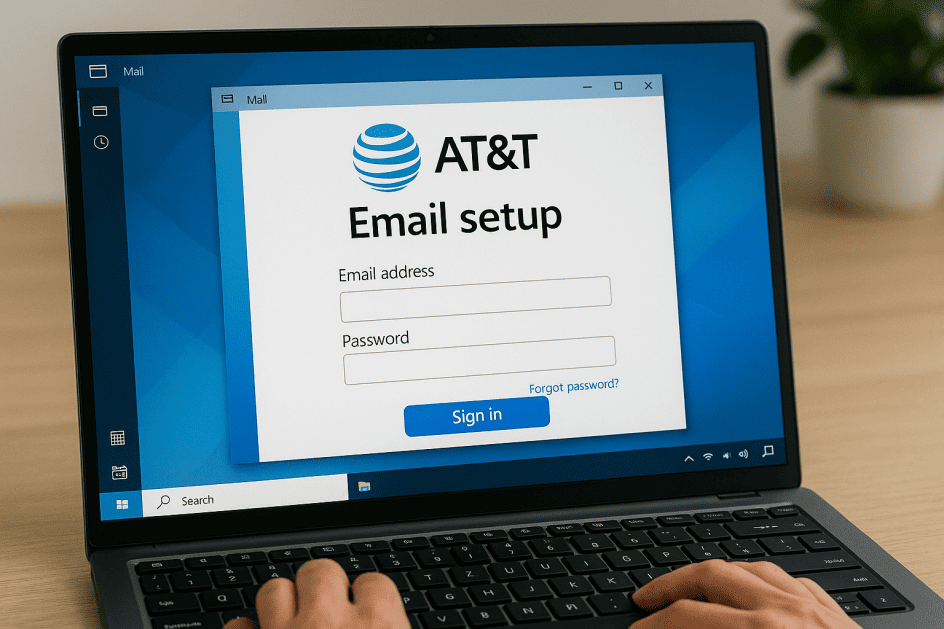
Configuring your AT&T email on the Windows Mail app is a convenient way to manage your messages directly from your desktop. Whether you choose the automatic or manual method, applying the correct ATT mail settings and secure login options ensures that your inbox syncs smoothly across devices.
1. Automatic Set up
The automatic approach is the fastest way to begin your ATT email set up on Windows Mail.
- Open Windows Mail → Add Account: Launch the Windows Mail app on your computer, click Accounts, then select Add account. This is where the app will begin to process your connection to the AT&T email domain.
- Select Yahoo: Since AT&T email operates through Yahoo’s infrastructure, choose Yahoo from the account list. This selection automatically prepares the app with predefined ATT mail IMAP settings.
- Enter AT&T Email and Secure Mail Key: Input your AT&T email address and your Secure Mail Key (not your regular password). This is crucial for proper authentication, especially when syncing through the updated AT&T mail server settings.
- Sync Settings Overview: Once logged in, review your sync preferences. You can customize how often your email refreshes, which folders sync, and how notifications appear—ensuring smooth access on devices like Outlook using ATT mail settings, iPhone using AT&T net email settings for iphone, or Android via the ATT email app for android.
2. Manual Set up
If automatic setup fails, manual configuration offers full control.
- IMAP/POP Settings: Choose IMAP for multi-device syncing. This ensures compatibility with core AT&T IMAP settings.
- SSL Requirements: Enable SSL for both incoming and outgoing servers. SSL encryption is essential for secure data transfer under AT&T’s system.
- Server Configurations: Manually enter the correct AT&T mail server settings, including incoming IMAP and outgoing SMTP settings. Ensuring these values are accurate prevents sign-in errors and sync disruptions.
With these steps, your AT&T email will run efficiently and securely on the Windows Mail app.
ATT Email Set up on Apple Devices (Mac, iPhone, iPad)
Setting up AT&T email on Apple devices is simple when you use the correct configuration steps and updated ATT mail settings. Whether you’re using an iPhone, iPad, or Mac, ensuring accurate server configuration through the AT&T email domain is essential for smooth syncing and secure access.
1. Set up on iPhone/iPad
Setting up AT&T email on iOS is straightforward and relies on Apple’s built-in Mail app.
- Go to Settings → Mail → Accounts: Open the Settings app, select Mail, and tap Accounts to begin the ATT email set up
- Add Account → Yahoo: Tap Add Account and choose Yahoo. Since AT&T email runs through Yahoo’s infrastructure, this automatically loads basic ATT mail IMAP settings compatible with iOS.
- Enter AT&T Email and Secure Mail Key: Sign in with your AT&T email address and Secure Mail Key. This is required to authenticate safely with updated AT&T net email settings for iphone and prevent login issues.
- Enable or Disable Sync Items: Choose which data to sync—Mail, Notes, Contacts, or Calendars. This ensures your account functions seamlessly alongside apps like using AT&T net email settings for iphone.
2. Mac Mail Set up
Setting up AT&T email on Mac offers both automatic and manual configuration options.
- Open Mail → Accounts: Go to the Mail app, open Accounts, and select Add Account.
- Manual IMAP/POP Setup: For manual configuration, choose IMAP for multi-device syncing and apply the correct AT&T IMAP settings or POP if preferred. Ensure incoming and outgoing details match official AT&T mail server settings.
- Fixing SSL Issues on Mac: If you encounter SSL errors, enable “Allow insecure authentication” temporarily, then re-enable SSL once the connection stabilizes.
3. Apple Mail Troubleshooting
- Fix “Cannot Verify Server Identity”: This common error appears when SSL certificates don’t match. Remove and re-add the account to reset the certificate trust chain.
- Re-Sync the Mailbox: Disable Mail sync, wait 10 seconds, then re-enable it to force a fresh sync using accurate ATT SMTP settings.
- Reset the Mail App: If issues persist, restart the Mail app or reboot your device for a full refresh.
Following these steps ensures smooth, secure, and reliable AT&T email access across all Apple devices.
Setting Up AT&T Email on Android Devices
Setting up AT&T email on Android devices is easy when you follow the correct steps and apply the proper ATT mail settings. Whether you prefer the Gmail app or the default Android email client, using the correct incoming and outgoing AT&T mail server settings ensures smooth synchronization and secure access linked to the AT&T email domain.
Using the Gmail App
The Gmail app is the most popular choice for Android users and fully supports AT&T email configuration.
- Add Account → Other: Open the Gmail app, go to Settings, tap Add account, and choose Other. This begins the ATT email set up
- Enter AT&T Email Address: Type in your full AT&T email address to initiate automatic detection of basic server parameters connected to your AT&T email domain.
- IMAP Configuration: Choose IMAP as your account type. IMAP is recommended because it allows multi-device syncing using the correct AT&T IMAP settings.
- Outgoing Server Authentication: Enter your Secure Mail Key for outgoing server authentication. This ensures Gmail can send messages properly using updated SMTP settings.
Using the Default Android Email App
Android’s built-in email app supports both automatic and manual configuration options.
- Manual and Automatic Setup: Automatic setup works in most cases, but if it fails, switch to manual mode and enter the exact AT&T mail server settings for IMAP or POP.
- Notification and Sync Settings: Once added, adjust sync frequency, notification preferences, and folder management to maintain seamless connectivity across devices—including when using ATT mail settings for outlook on a Windows PC.
Common Android Errors
- Server Not Responding: This often occurs when IMAP/SMTP ports are incorrect or when the ATT mail settings are outdated.
- Authentication Required: Fix this by regenerating your Secure Mail Key and re-entering it in the app.
- App Cache Problems: Clearing cache and app data often resolves sync and loading issues within the ATT email app for android or Gmail.
By following these steps, AT&T email will run securely and efficiently on any Android device.
AT&T Email IMAP, POP3, and SMTP Server Settings
To ensure a smooth and error-free ATT email set up, you must configure your mail client with the correct server settings. Whether you’re accessing email through Outlook, iPhone, Android, or any other client, applying the proper incoming and outgoing server details is crucial for secure and consistent syncing across the AT&T email domain.
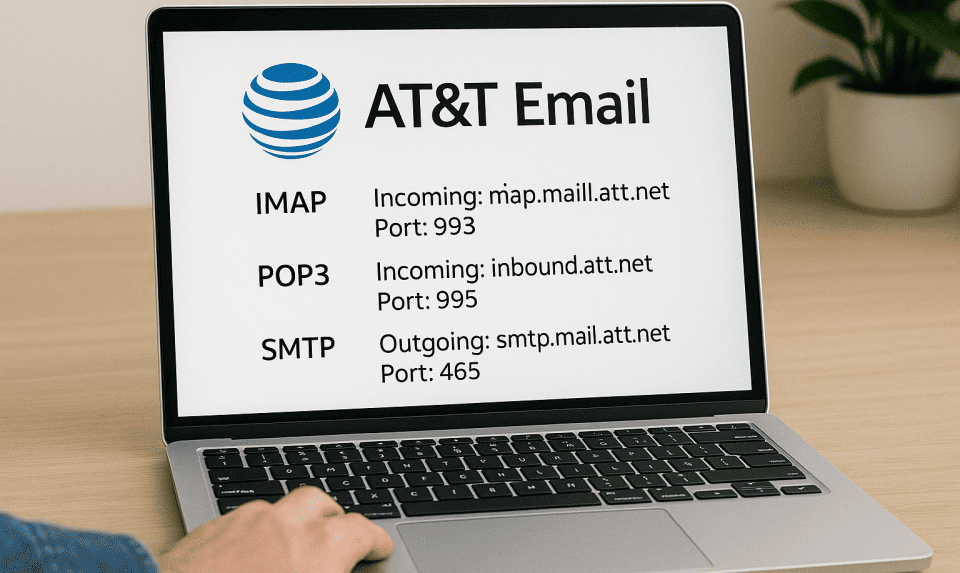
AT&T Email Server Settings Table
| Server Type | Setting | SSL Required | Port |
| Incoming IMAP Server | IMAP.mail.ATT.net | Yes | 993 |
| Incoming POP3 Server | inbound.ATT.net | Yes | 995 |
| Outgoing SMTP Server | SMTP.mail.ATT.net | Yes | 465 |
These values support the latest AT&T IMAP settings and SMTP settings required for secure access across modern devices.
When to Use IMAP vs POP3
- IMAP is recommended for most users because it syncs emails across multiple devices simultaneously. This is ideal for those who frequently access accounts via Outlook using ATT mail settings for outlook, the Gmail app, the ATT email app for android and for iphone.
- POP3 should only be used if you prefer downloading and storing all emails locally on a single device. POP3 does not offer multi-device synchronization and may cause missing emails if used incorrectly.
Using these accurate ATT mail settings guarantees secure communication, stable syncing, and full compatibility with all major email applications.
How to Generate an ATT Secure Mail Key
An ATT secure mail key is essential for completing a secure and reliable ATT email set up, especially when accessing your AT&T email through third-party apps or older devices. Many email programs cannot authenticate using a regular password, so the Secure Mail Key acts as a unique, encrypted login code compatible with modern AT&T mail server settings, IMAP settings, and SMTP settings. Without this key, your email app may fail to sync or repeatedly ask for your password.
Why a Secure Mail Key Is Required
A Secure Mail Key enhances security by replacing your standard account password during email login. It works specifically with apps like Outlook (using ATT mail settings for outlook), for android and devices operating under the AT&T email domain that require encrypted authentication based on IMAP settings.
- Steps to Generate the Key
- Sign in to your AT&T account profile.
- Navigate to Account Security or Manage Secure Mail Key.
- Select Create Secure Mail Key.
- Name your key (e.g., “Outlook PC” or “Android Phone”).
- Click Generate and copy the key immediately.
- Paste this key into your email app’s password field when updating your ATT mail settings.
- Managing, Editing, or Deleting Keys:
You can return to the Secure Mail Key management page at any time to rename, delete, or regenerate keys. If an app stops syncing, simply delete the old key and create a new one. - Apps That Require a Secure Mail Key:
Older versions of Outlook, Apple Mail, Android’s default mail app, and any client not supporting OAuth require this key to successfully authenticate through AT&T mail server settings.
Using a Secure Mail Key ensures your AT&T email stays secure, compatible, and fully functional across all devices.
Fixing Common ATT Email Set up Errors
Even with the correct ATT email set up, users may still encounter issues related to login, syncing, or security. These problems usually stem from outdated applications, incorrect configurations, or account protection features. Understanding how to troubleshoot them ensures smooth access across all devices connected to the AT&T email domain.
1. Login Issues
- Forgot Password: If you cannot log in, reset your password through the AT&T account recovery page. Once reset, update the password or ATT secure mail key in every app where you’ve saved your credentials, including Outlook, iPhone, and for android.
- Locked Account Troubleshooting: Accounts may lock after multiple failed attempts. Wait the recommended timeframe, then reset your password or generate a new secure key to reapply your ATT mail settings.
For more detailed information, read our detailed blog on ATT Mail Login Issue
2. Device/App Sync Problems
- Outdated App: Older versions of Outlook or mobile mail apps may not support modern AT&T mail server settings. Update your app to ensure compatibility with current AT&T IMAP settings and SMTP settings.
- Incorrect Server Settings: Most sync errors occur when the IMAP, POP, or SMTP values are incorrect. Re-enter the correct ATT mail IMAP settings, especially if you manually configured settings for outlook or for iphone.
3. Security-Related Problems
- Two-Factor Verification: If 2FA fails, confirm your phone number or recovery email. Outdated verification details can block login attempts on third-party apps.
- Suspicious Login Alerts: AT&T may temporarily block access if it detects unusual activity. Reset your password and create a new secure key before reconfiguring your ATT mail settings.
4. Browser & Network Issues
- Clearing Cache: A cluttered browser cache may prevent proper loading of the login page. Clearing cookies often resolves this issue.
- Best Browser for AT&T Email: For optimal stability when accessing the webmail interface, use Chrome, Edge, or Firefox—browsers known to support secure AT&T mail server settings
With the right troubleshooting steps, you can resolve most errors and restore a smooth, secure AT&T email experience across all your devices.
Best Practices to Keep Your AT&T Email Secure
Keeping your AT&T email account secure is just as important as completing the initial ATT email set up. With growing digital threats, following strong security habits ensures your account remains protected across all devices connected to the AT&T email domain.
-
Use Strong, Unique Passwords:
Always create complex passwords that combine letters, numbers, and symbols. Avoid reusing passwords from other accounts. Even with correct ATT mail settings, weak passwords put your account at risk. For added protection on third-party apps, use an ATT secure mail key instead of your regular password.
-
Avoid Public Wi-Fi:
Public networks are vulnerable to hackers who can intercept login information. When accessing your mailbox through Outlook using ATT mail settings for outlook, or for iphone and for android, always use secure, private connections.
-
Enable Two-Step Verification:
Two-step verification adds an additional layer of security by requiring a second authentication factor. Even if someone obtains your password, they cannot access your account without your verification code—especially important for accounts using AT&T IMAP settings.
-
Regularly Update Devices and Apps:
Outdated apps may fail to support modern AT&T mail server settings or secure protocols such as SSL for ATT SMTP settings. Keep your operating system, browser, and email applications updated at all times.
-
Be Aware of Phishing Scams:
Never click suspicious links or download ATTachments from unknown senders. Hackers often disguise emails to trick users into revealing their credentials or security keys.
Following these best practices helps keep your AT&T email secure, reliable, and fully protected across every device.
FAQs
Q1. How do I start the ATT email set up process on a new device?
- A. To begin the ATT email set up, make sure you have an active AT&T email account and your Secure Mail Key ready. Then apply the correct settings or automatic login options depending on your device.
Q2. What ATT mail settings are required for proper AT&T email sync?
- A. The essential ATT mail settings include incoming IMAP, outgoing SMTP, and SSL-enabled ports. These ensure reliable communication with updated AT&T mail server settings.
Q3. Why do I need an ATT secure mail key for certain apps?
- A. An ATT secure mail key replaces your regular password and provides encrypted access for apps that do not support OAuth. This is required for smooth use of ATT mail settings for outlook and other third-party mail clients.
Q4. Why is my email not syncing even with correct ATT mail settings?
- A. Sync failures usually happen due to incorrect AT&T mail server settings, outdated apps, or missing security keys. Regenerate your ATT secure mail key and re-enter the IMAP/SMTP details to fix the issue.
Q5. Why are emails missing on one device but appear on another using ATT mail IMAP settings?
- A. If you use ATT mail IMAP settings, your emails sync across devices. Missing emails often indicate incorrect folder subscriptions or outdated settings. Ensure your client is using valid AT&T IMAP settings.
Q6. Are there any risks in using public Wi-Fi for AT&T mail login?
- A. Yes, Logging in through public Wi-Fi can expose your account credentials—even with correct ATT mail settings. Use private networks along with your ATT secure mail key for safer access.
Conclusion
Setting up your AT&T email across all your devices becomes simple and seamless when you understand the correct process and apply the right ATT mail settings from the very beginning. Throughout this guide, we walked through every major step of the ATT email set up, whether you’re signing in through a web browser, configuring desktop clients like Outlook, or syncing your account on mobile devices using the AT&T net email settings for iphone or for android.
By using accurate AT&T mail server settings, such as the recommended IMAP settings, and secure SMTP settings, you ensure that your email syncs smoothly, loads quickly, and functions consistently across all platforms. Configuring your account correctly not only enhances performance but also improves reliability—especially for users working with ATT mail settings for outlook or managing multiple devices under the AT&T email domain.
Another essential component is understanding and using the ATT secure mail key, which plays a major role in preventing login errors and strengthening your account security. Proper setup results in fewer authentication failures, reduced syncing issues, and a far smoother communication experience.
As you continue using your AT&T email, remember to follow core security practices: keep your devices updated, enable two-step verification, avoid public Wi-Fi, and remain alert to phishing attempts. These proactive habits ensure your account stays secure and fully optimized.
By applying the correct configuration settings and following strong security routines, you’ll enjoy a safer, more efficient, and reliably connected AT&T email experience—no matter which device you use.
For more details regarding ATT Mail and other issues and solutions for it, go to our ATT Email Support page.
 Call Voice Support